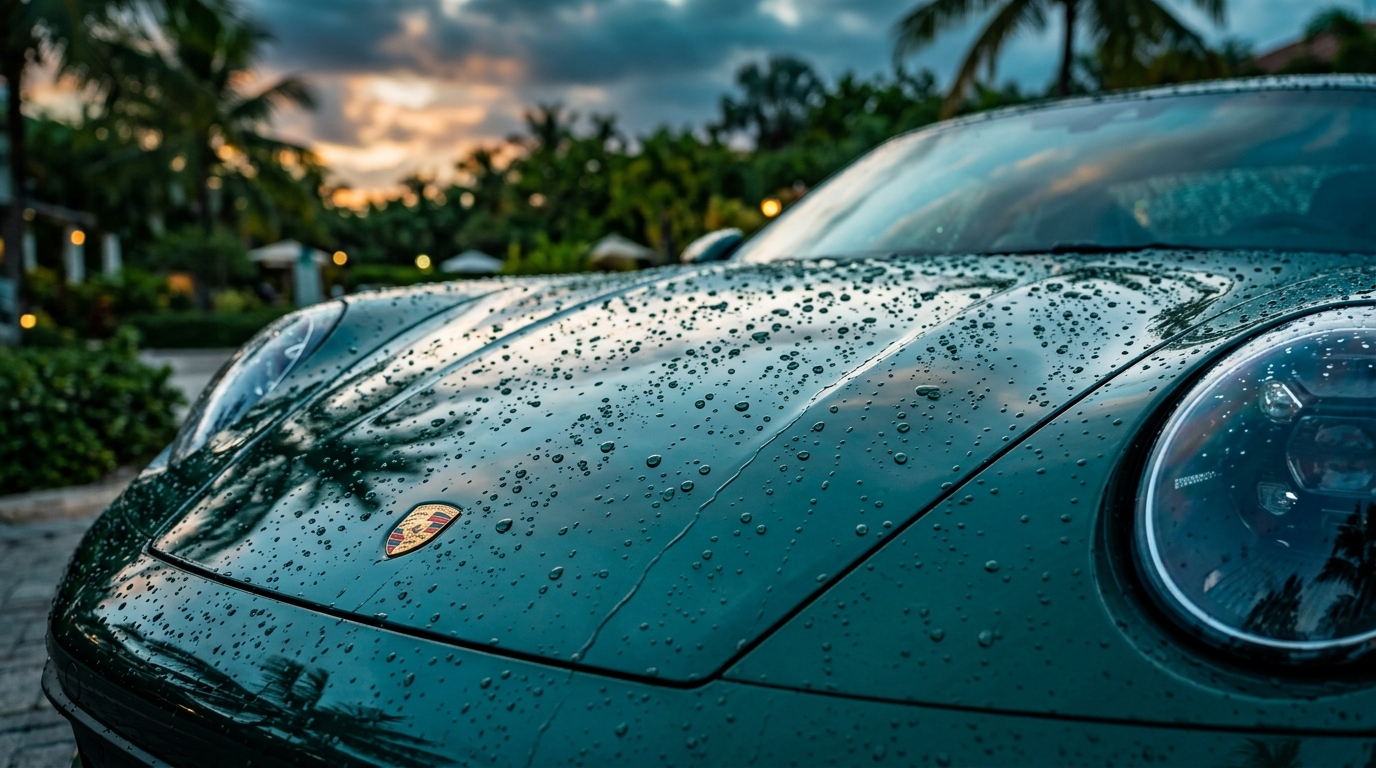
Mauritius is one of the most beautiful places on earth to own a car. It's also one of the harshest. Strong year-round UV radiation, coastal salt air, frequent tropical downpours, and high humidity create conditions that degrade car paint significantly faster than most temperate climates. Ceramic coating is increasingly popular among Mauritian car owners — but does it actually work?
What Is Ceramic Coating?
Ceramic coating is a liquid polymer applied to a vehicle's exterior surfaces. When cured, it bonds chemically with the paint and creates a hard, semi-permanent protective layer. It is distinct from traditional wax or paint sealant — those sit on top of the paint and wash away over time. A properly applied ceramic coating becomes part of the car's surface.
What Ceramic Coating Actually Protects Against
UV protection is one of the most significant benefits in Mauritius specifically. UV radiation oxidises and fades paint — a process called UV degradation. The protective layer in a ceramic coating acts as a UV filter, significantly slowing this process and keeping colours vivid for longer.
Hydrophobic properties mean water beads and runs off the surface rather than pooling. This is particularly relevant during the wet season — standing water accelerates contamination and, over time, paint etching.
Salt air protection matters on an island. Coastal areas in Mauritius expose vehicles to airborne sodium chloride. Over time, this accelerates corrosion, especially on any exposed metal. A ceramic coating creates a sealed barrier that limits contact between salt and the paint surface.
Chemical resistance helps protect against bird droppings, insect residue, and tree sap — all of which are mildly acidic and can etch bare paint if left untreated.
What Ceramic Coating Does NOT Do
There are common misconceptions worth addressing. Ceramic coating is not scratch-proof. It adds hardness to the surface, which helps resist minor abrasion, but it will not prevent keying, deep scratches, or stone chip damage. For that, paint protection film (PPF) is the more appropriate product.
It also does not eliminate the need for washing. Ceramic-coated vehicles still get dirty. The benefit is that cleaning is faster and easier — contaminants don't bond as strongly to the surface.
Is It Worth It for Mauritius?
Given the climate, yes — ceramic coating is a particularly sound investment for Mauritian car owners. The combination of UV intensity, salt air, and humidity means paint ages faster here than almost anywhere in Europe. Ceramic coating materially extends the period before oxidation, fading, and paint degradation become visible.
The secondary benefit is practicality: a coated car is genuinely easier and faster to maintain clean.
How Long Does It Last?
Applied correctly using professional-grade products, ceramic coatings last two to five years depending on the product tier, preparation quality, and maintenance. At Repair2Care, we use OEM-approved coating products designed for longevity in varied climates.
Before and After Application
Correct preparation is critical. The paint must be fully decontaminated, polished if needed, and free of any surface defects before coating is applied — any imperfections sealed beneath the coating will remain visible. This is why professional application matters.
If you're interested in ceramic coating for your vehicle, contact us for a free consultation. We'll assess your paint condition and advise on the right approach.