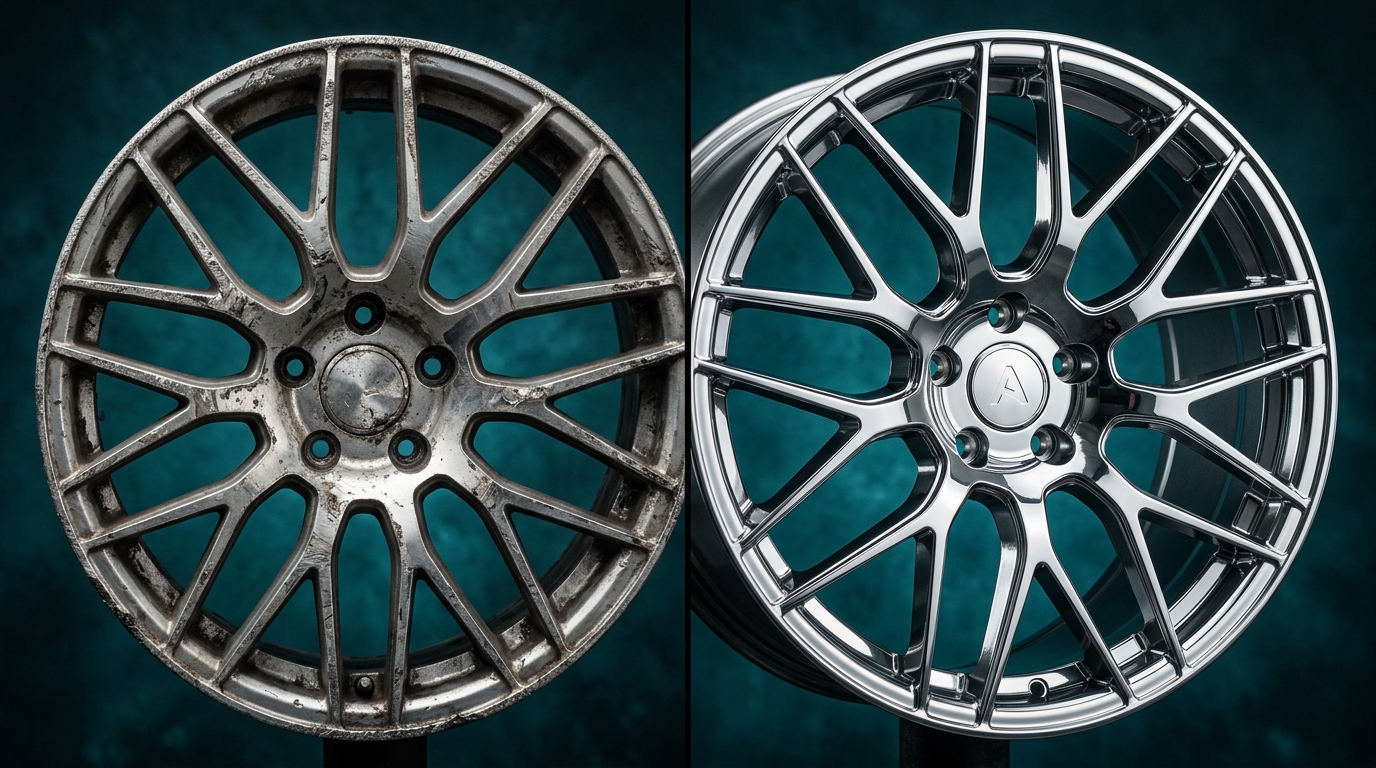
Alloy wheels are one of the first things people notice on a car — and one of the first things to suffer in day-to-day driving. A kerb clip while parking, a pothole at speed, or a poorly marked speed bump: the damage accumulates. For many drivers in Mauritius, the question becomes: do I repair or replace?
The answer, in most cases, is repair. Here's why.
The Types of Alloy Wheel Damage
Not all wheel damage is the same. Understanding what you're dealing with determines whether repair or replacement is the right call.
Cosmetic damage includes scuffs, kerb rash, scratches, and peeling paint. This is the most common type of damage and is almost always repairable without replacement.
Diamond cut damage refers to the decorative machine-cut finish on many modern alloys. When this surface is scratched or corroded, it can be restored through a lathe-based diamond cutting process that machines the wheel back to its original profile and reapplies lacquer.
Structural damage — buckles, bends, or cracks — is more serious. Minor buckles can often be straightened using specialist equipment. Cracks, however, typically mean replacement is necessary for safety reasons.
What Does Alloy Wheel Repair Actually Involve?
At Repair2Care, we offer several levels of wheel repair depending on the type and severity of damage:
Wheel skimming removes a thin layer of the alloy surface to eliminate minor surface damage, followed by repainting and lacquering.
Diamond cut restoration uses a precision CNC lathe to recreate the original diamond-turned finish on machined wheels. The wheel is stripped, machined to remove damage, and then protected with a specialist lacquer coat.
Paint repairs address chips, scuffs, and colour mismatches — matching your exact OEM wheel colour and applying a durable finish.
Buckle repair uses hydraulic straightening equipment to return buckled or bent wheels to their correct profile.
Wheel ceramic coating is an optional protective step that adds a hard, hydrophobic layer over repaired or undamaged wheels to protect against future damage.
When Is Replacement the Right Answer?
Replacement makes sense in two situations: when the wheel is cracked (a safety issue that cannot be repaired), or when the cost of repair approaches or exceeds the cost of a quality used or new replacement wheel.
In most cosmetic damage scenarios, repair offers significantly better value. A full set of alloy wheel replacements in Mauritius can cost Rs 40,000–100,000+ depending on the vehicle. Repair of all four wheels for cosmetic damage typically costs a fraction of that.
The Resale Value Argument
Scuffed, scratched, or corroded alloys reduce your car's resale value — sometimes significantly. Buyers notice wheel condition immediately. Repairing your wheels before selling, or maintaining them throughout ownership, is one of the highest-return cosmetic investments you can make on a vehicle.
Get a Free Wheel Assessment
Not sure whether your wheels need repair or replacement? Send us a photo via WhatsApp or our contact form. We'll give you an honest assessment and a clear quote — no obligation, no pressure.